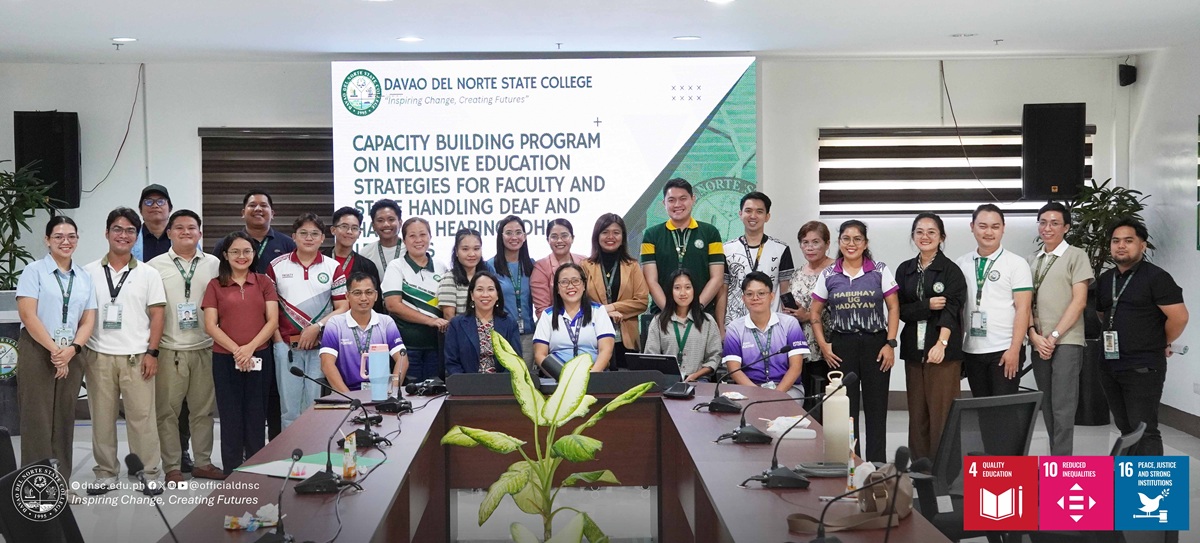
PANABO CITY – Davao del Norte State College demonstrated its commitment to inclusive higher education through a three-day capacity-building program for faculty and staff handling Deaf and Hard of Hearing (DHH) learners on October 7–9, 2026, at the Gender and Development Conference Room.
The activity invited selected teaching and non-teaching personnel and Deaf students to develop practical competencies in inclusive teaching, accessible communication, classroom accommodations, and learner support. Mariche Llanto, assistant professor in Special Education and sign language interpreter at the College of Education of the University of Southeastern Philippines, facilitated the sessions.
In her opening message, Dr. Leonida P. Piorac, Director for Curriculum and Instruction, emphasized the need to translate the College’s commitment to inclusion into practice across academic and administrative offices. Recalling questions raised during an external ISO audit about how DNSC accommodates learners with diverse needs.
The program aligns with Republic Act No. 11650, or the Inclusive Education Act, and Republic Act No. 11106, or the Filipino Sign Language Act, which promote accessible learning environments and the use of Filipino Sign Language in educational settings.
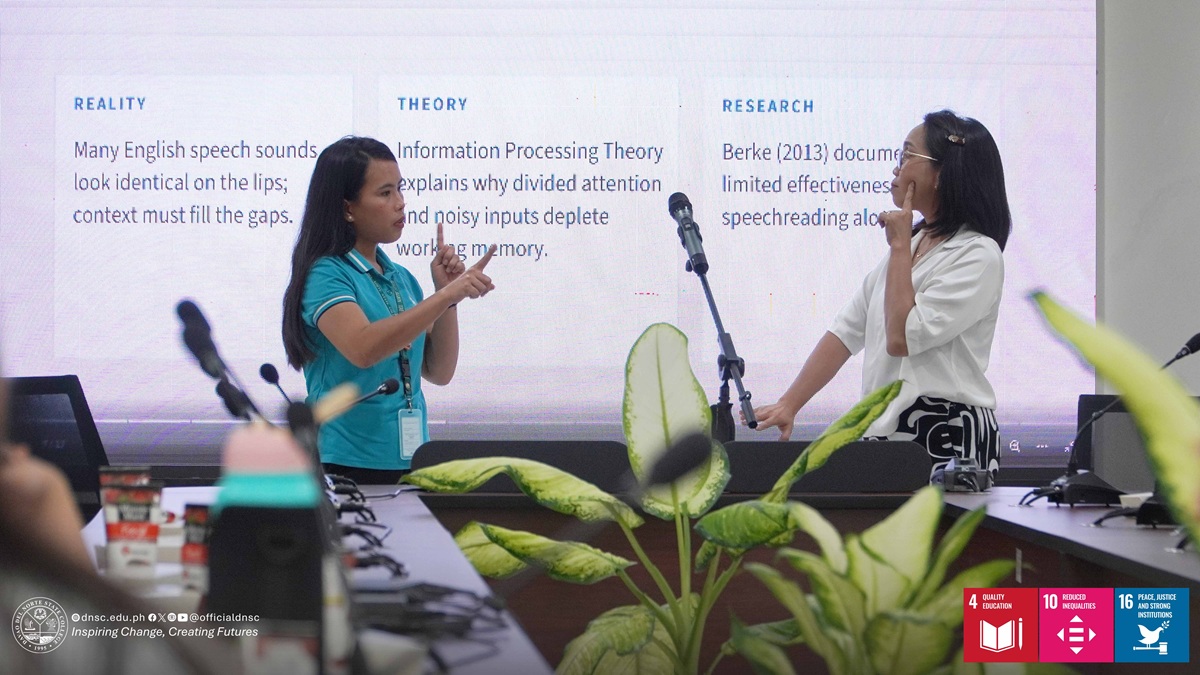
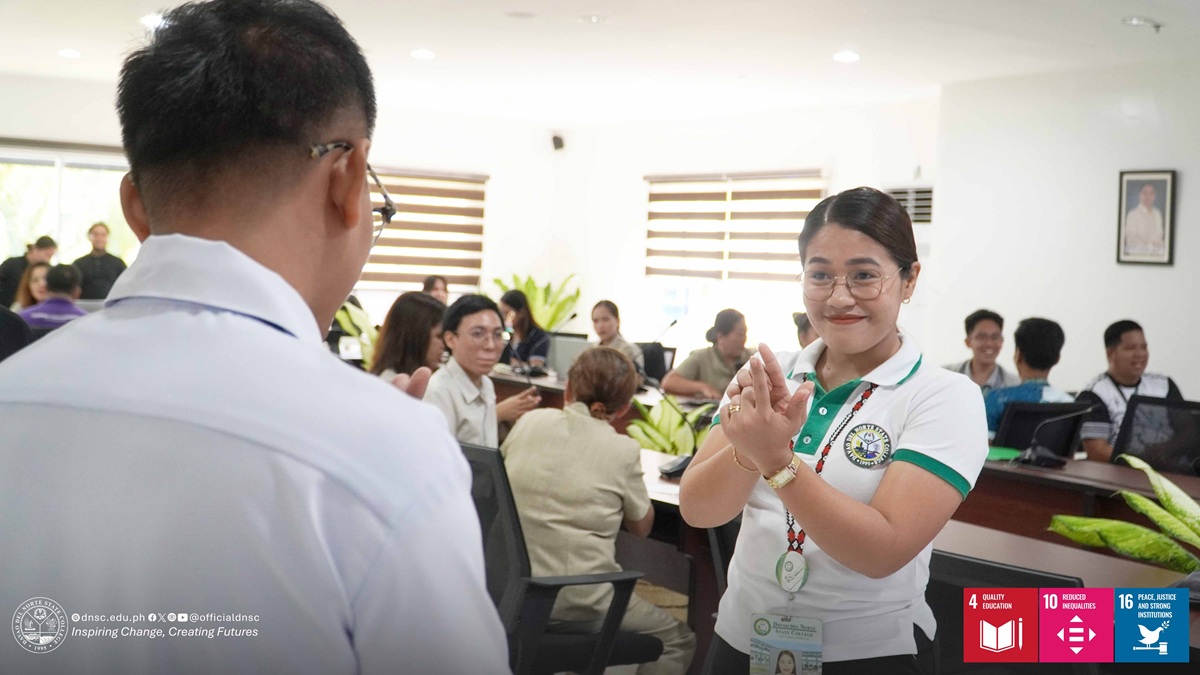
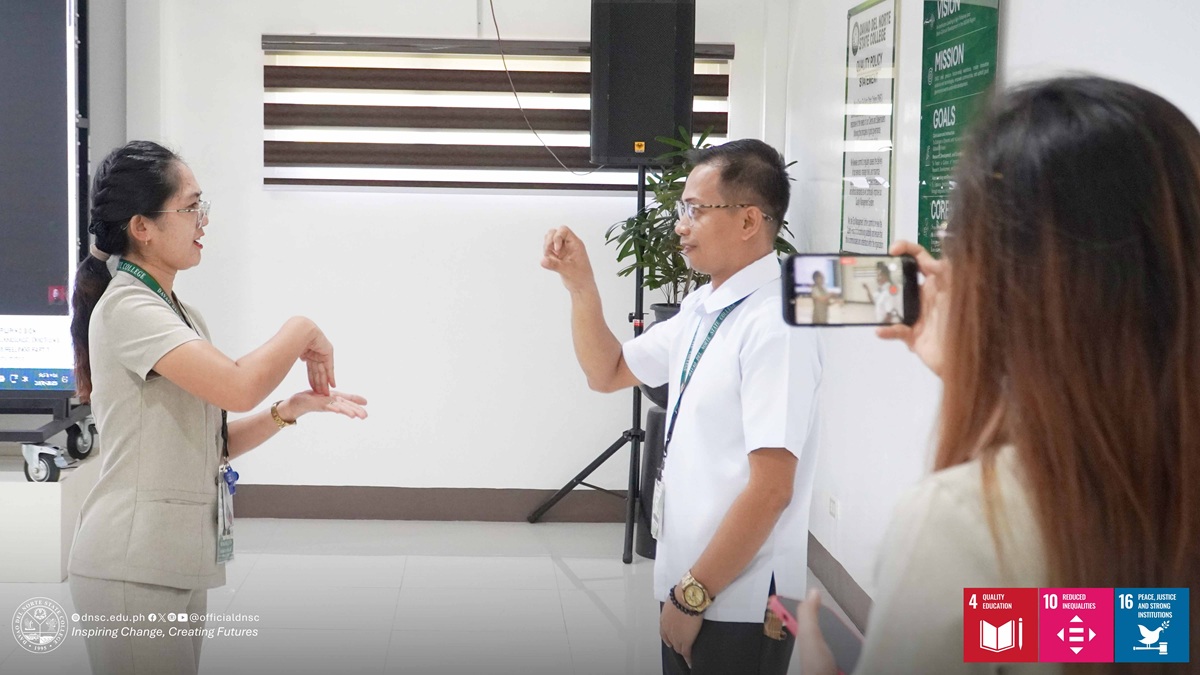
Through demonstrations and role-playing activities, participants explored ways to communicate with DHH learners and address potential barriers. They also learned basic Filipino Sign Language (FSL) to facilitate everyday interactions with Deaf students.
For Christy Lyne C. Relox, head of the Student Admission Services Unit, the training highlighted the importance of learning sign language, “Being in the office, need pud nako makalearn og sign language. Because, of course, I’m in the front line.”
The sessions also outlined visual teaching strategies, accessible learning materials, and curriculum and assessment adjustments to encourage participation among DHH learners. Participants were encouraged to develop actionable institutional plans to address accessibility concerns in their respective offices and classrooms.
In her closing message, Raquel Edjec reminded participants that inclusive education requires sustained effort and responsiveness in their daily work.
“To my colleagues, as you return to your respective classrooms and offices, remember that your patience, your visibility, and your willingness to adapt will define our Deaf and Hard of Hearing students’ educational journey,” she said.
The initiative also supports DNSC’s human resource development agenda and the Civil Service Commission’s Program to Institutionalize Meritocracy and Excellence in Human Resource Management (PRIME-HRM) through competency-based learning interventions that address identified training needs.