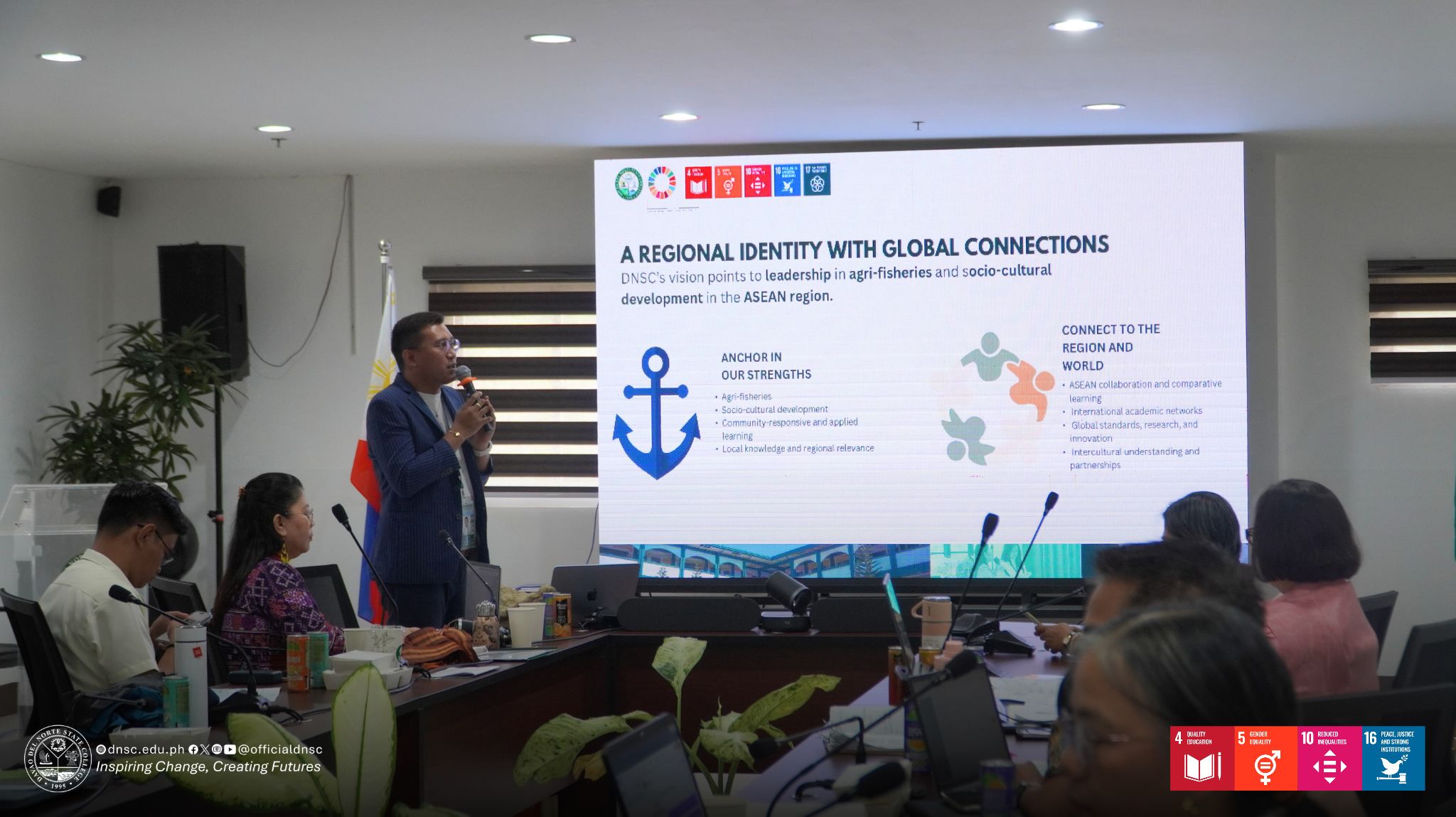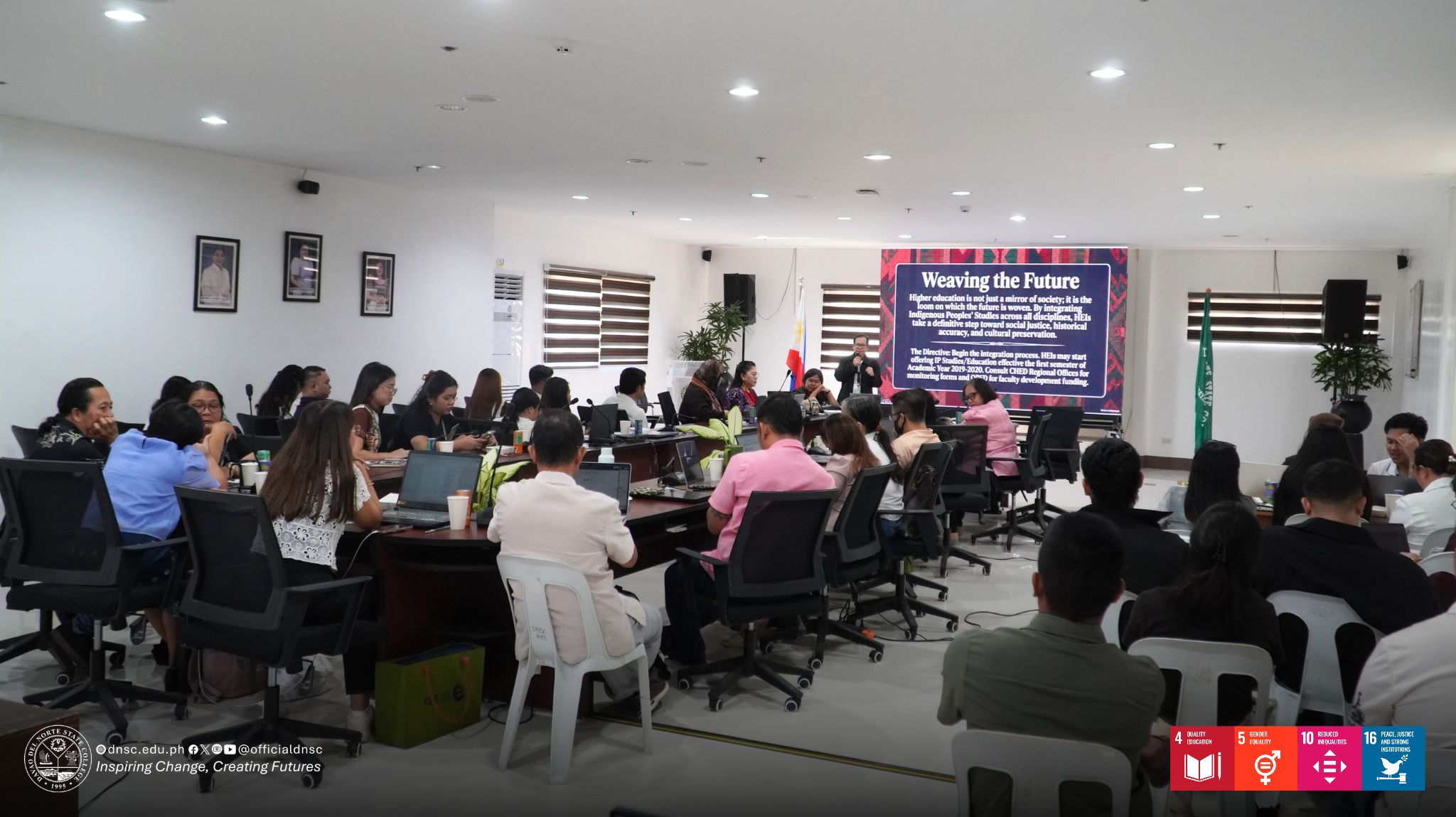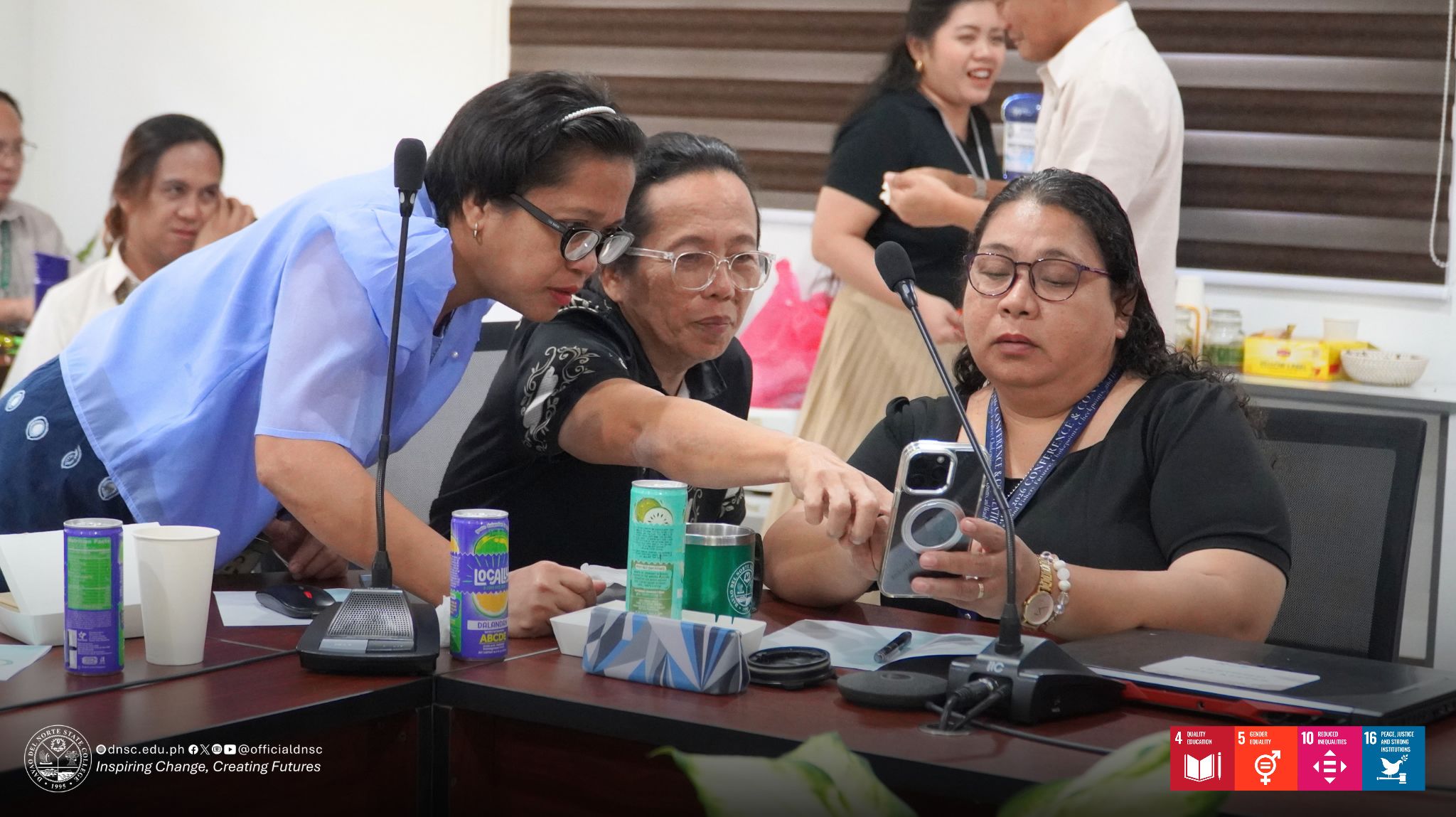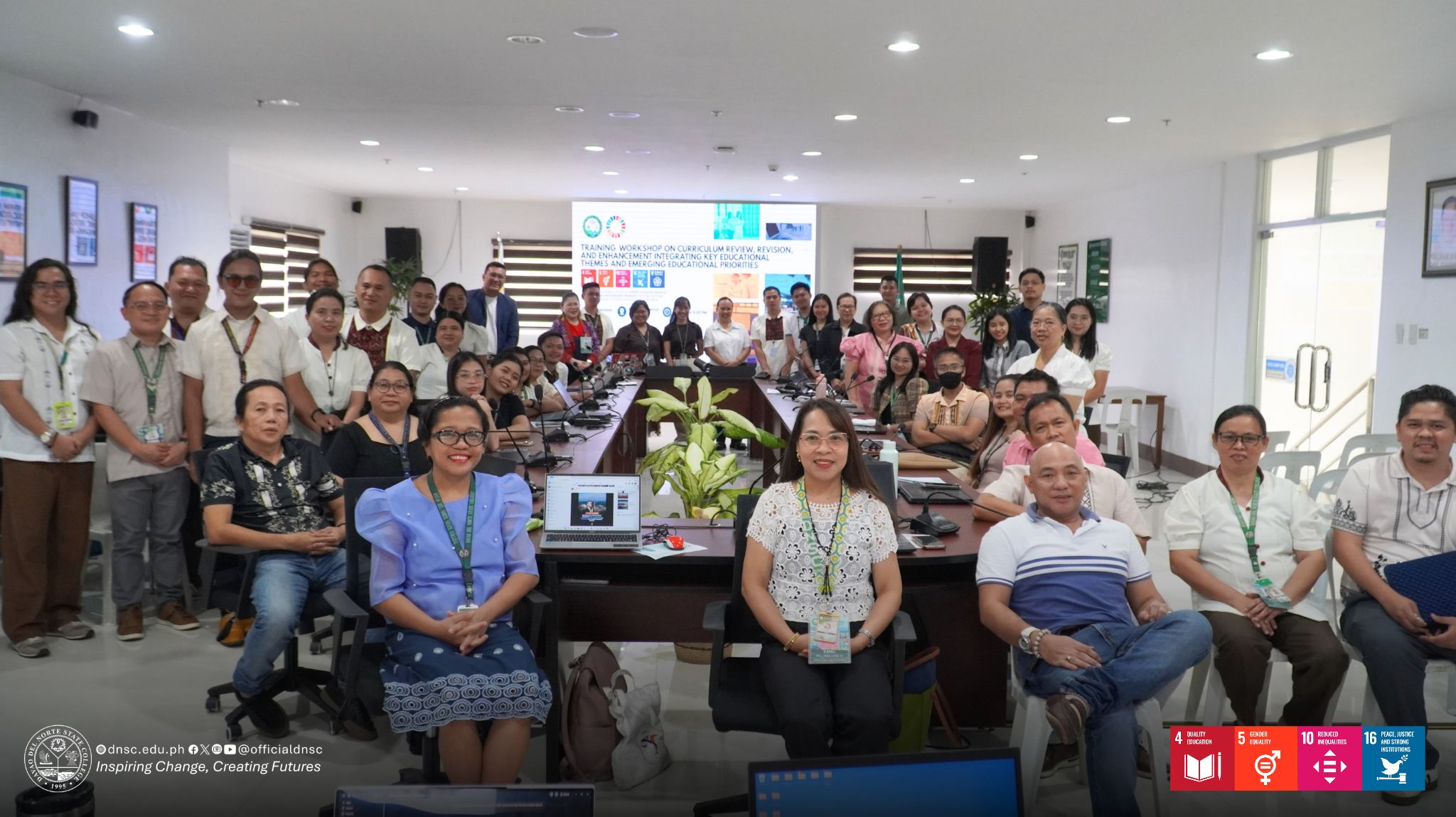
PANABO CITY – Davao del Norte State College, through its Office of the Vice President for Academic Affairs (OVPAA) and Curriculum and Instruction Division (CID), conducted a Training Workshop on Curriculum Review, Revision, and Enhancement Integrating Key Educational Themes and Emerging Educational Priorities on November 9, 2026, at the GAD Conference Hall.
The one-day workshop convened members of the College Curriculum Committee, institute deans, and program chairpersons for both graduate and undergraduate degrees to strengthen their understanding of key educational themes and emerging priorities that are considered for infusion in the revision of the College’s curricula.
The sessions covered six major topics, beginning with the key features of Commission on Higher Education (CHED) Memorandum Order No. 1, series of 2015, and the Gender and Development (GAD) Transformative Curriculum, discussed by Assoc. Prof. Sadie D. Law-ay, GAD Unit Head. Dr. Ana Raissa T. Lagarto, Indigenous Peoples (IP) Coordinator, facilitated the session on integrating Indigenous Peoples Studies.
The workshop also delved into the rationale and integration of Peace Studies, presented by Ms. Fatima Star U. Lamalan, ForumZFD Country Director, and Mr. Manuel I. Jarabe, Social Science faculty member. Mr. John Jefferson dela Cruz, an Information Technology faculty member, provided an orientation on the course Information Technology in the Modern World.
Mr. Mer Jun Q. Cañas, Head for Internationalization Initiatives and External Affairs, discussed embedding internationalization in the curriculum. The sessions culminated in a discussion on curriculum integration and the development of an action plan and timeline, led by Dr. Leonida Porras-Piorac, CID Director.
In her message on the workshop’s ways forward, VP for Academic Affairs Dr. Ma. Melanie N. Edig emphasized the College’s responsibility to sustain curriculum transformation and ensure that academic programs remain responsive to societal realities and emerging educational needs.
“Above all, we must sustain curriculum transformation as a continuing institutional responsibility. We have the responsibility not only to reflect the realities of our society but also to shape a future that is more inclusive, equitable, culturally responsive, and respectful of our diversity,” Dr. Edig said.