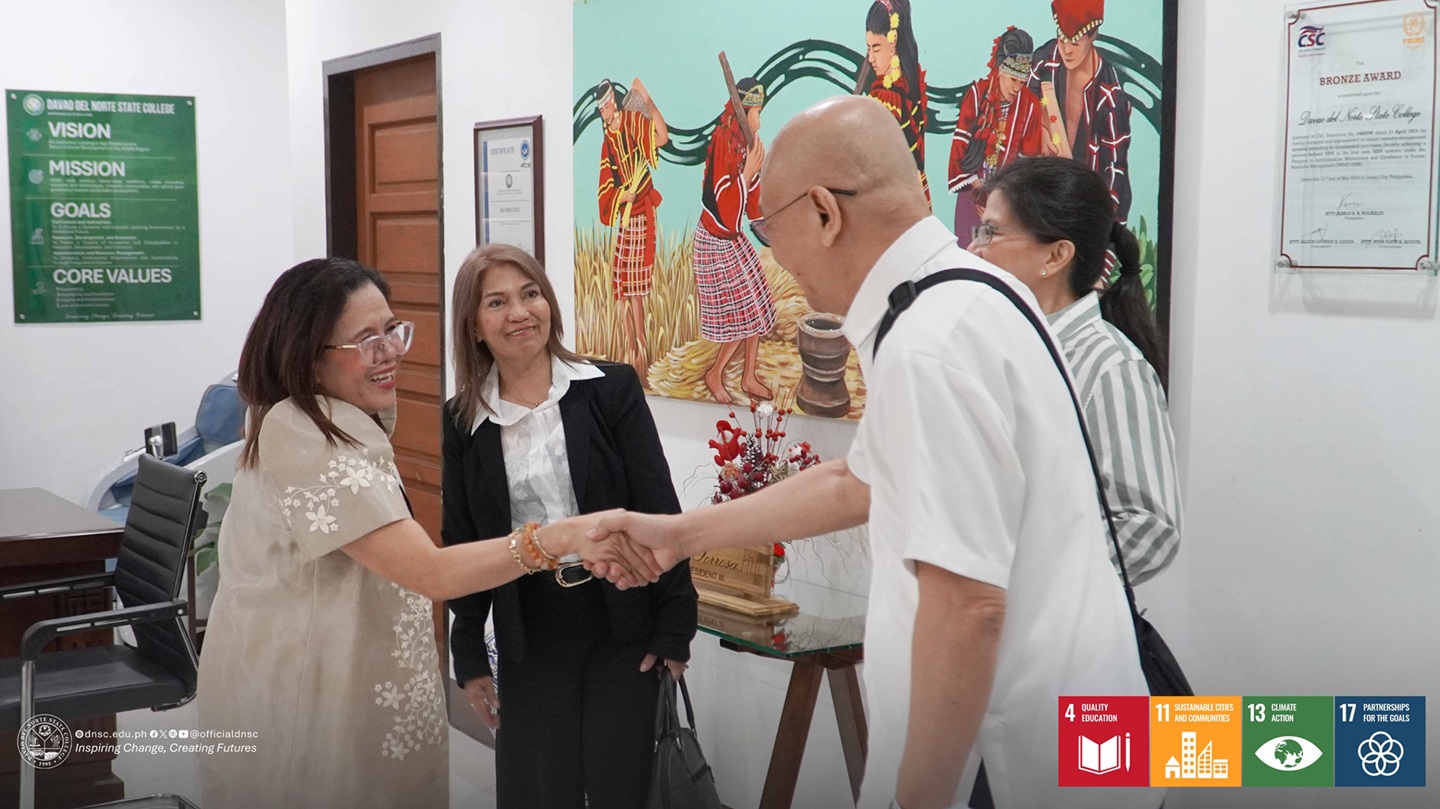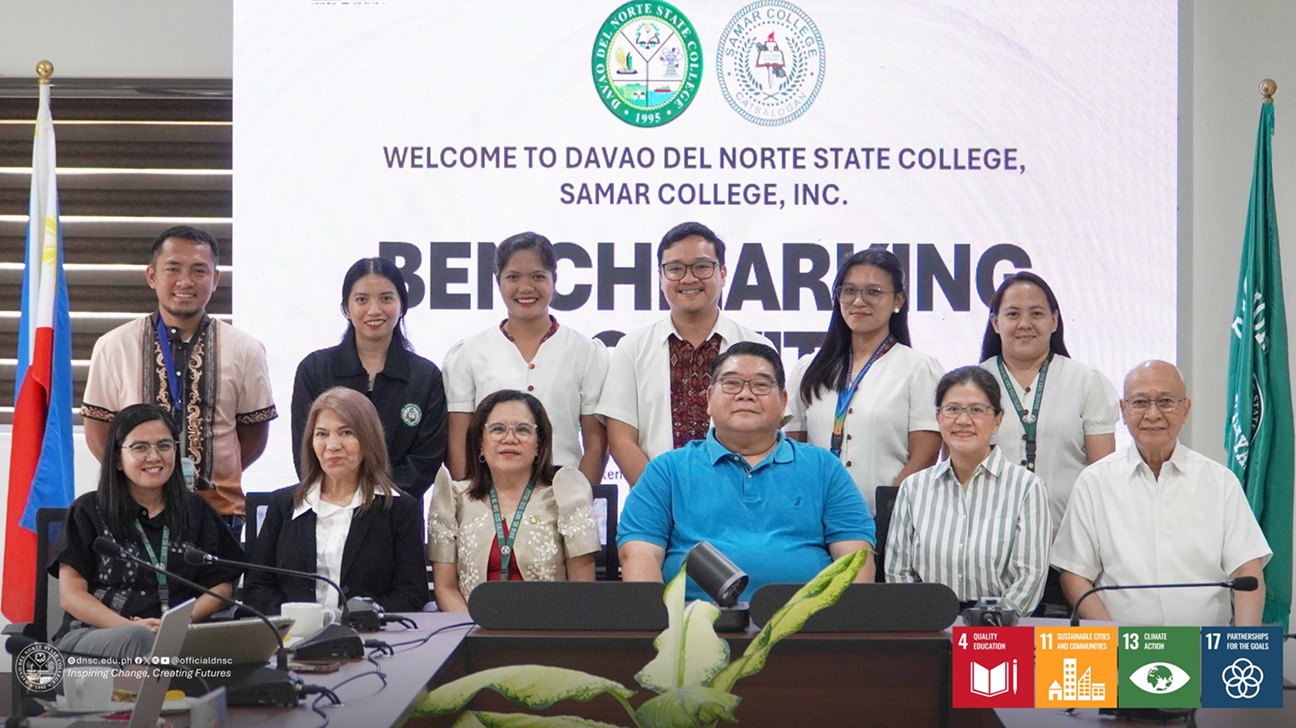
PANABO CITY – Davao del Norte State College welcomed officials from Samar Colleges, Inc. (SCI), Catbalogan City, for a benchmarking visit focused on the Bachelor of Science in Disaster Resilience and Management (BSDRM) program, as SCI explores the possibility of offering the program in the Visayas.
The SCI delegation was led by School President and Chairman of the Board of Directors Rhett Caesar L. Piczon, together with Senior Vice President for Programs Development and Quality Assurance Marilyn D. Cardoso, Senior Vice President for Administration Manuelilda Rosario A. Torrevillas, and Senior Vice President for Academic Programs Pedrito G. Padilla.
They were met by DNSC President Joy M. Sorrosa, along with the BSDRM faculty members and the Institute of Business and Public Affairs Dean Florie Ann L. Fermil.
The benchmarking activity provided SCI officials an opportunity to learn from DNSC’s experience in developing and implementing the BSDRM program, which has been granted a Certificate of Program Compliance (COPC) by the Commission on Higher Education (CHED) and has undergone accreditation.
During the discussions, DNSC’s BSDRM faculty presented an overview of the program, including its academic direction, program structure, initiatives, practices, and implementation experiences. The faculty also discussed the changes introduced under the new curriculum compared with the previous curriculum, as well as the program’s on-the-job training (OJT) deployment and related field experiences.
The discussions also covered key considerations in establishing and managing a BSDRM program, including curriculum development, faculty requirements, facilities, program administration, partnerships, and field instruction.
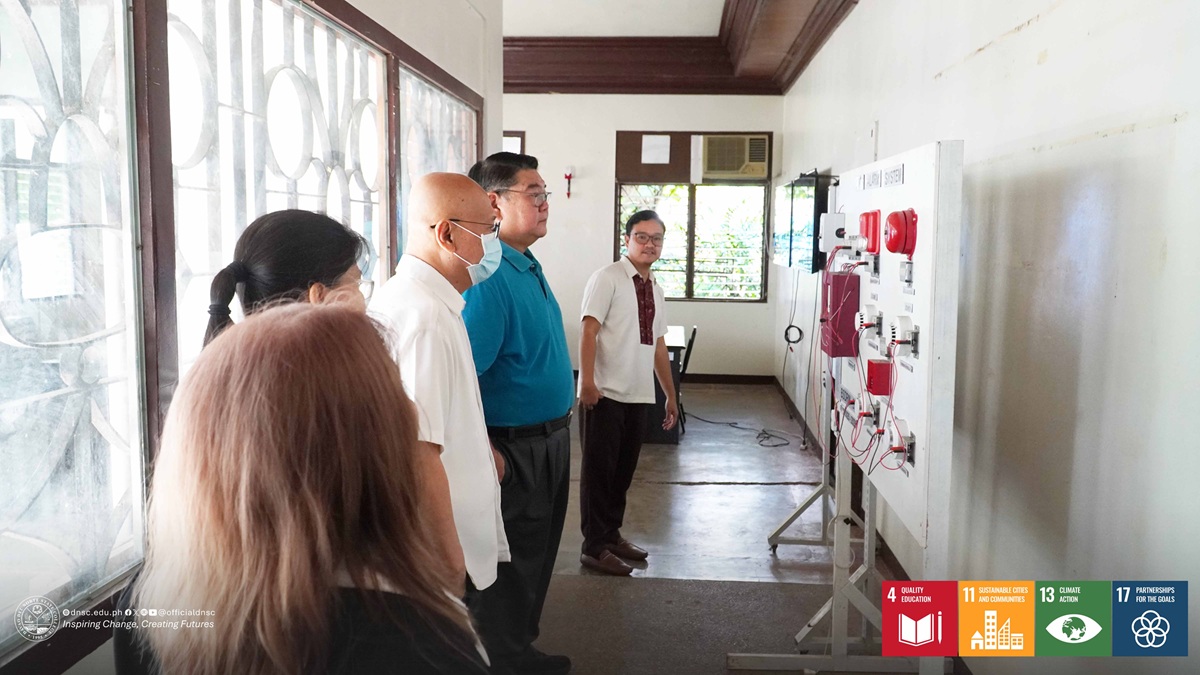
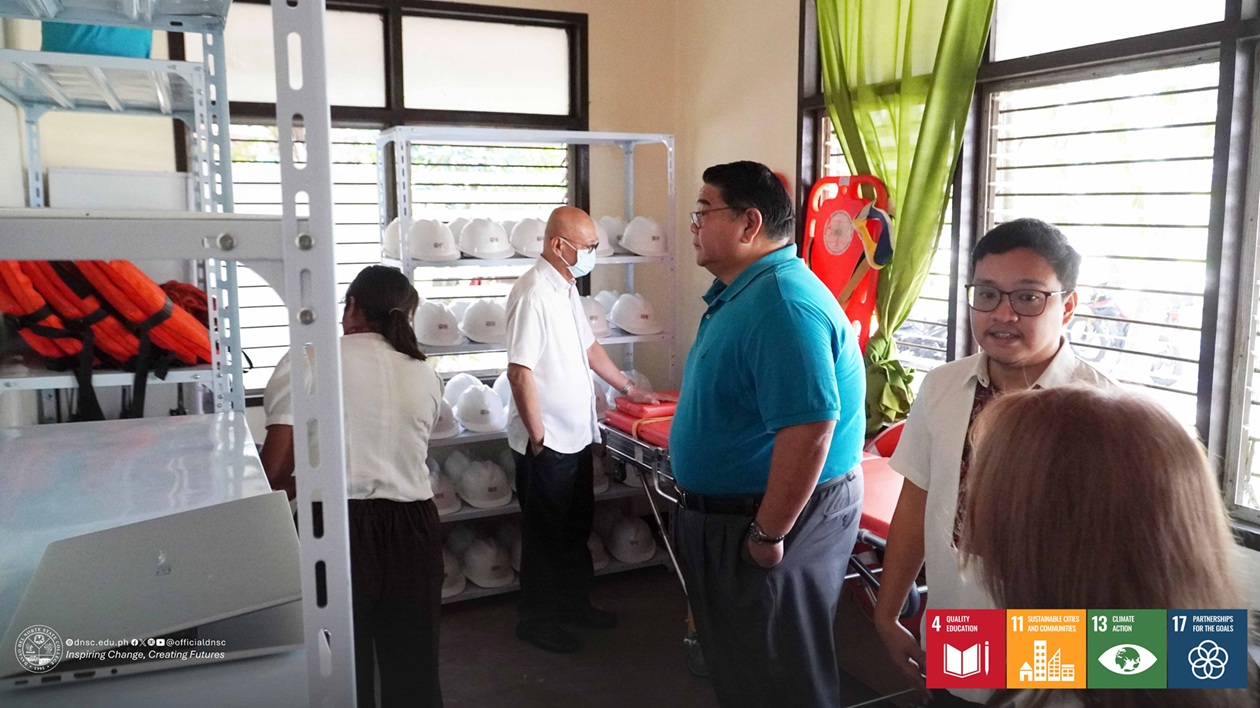
Following the presentation and exchange of insights, the SCI delegation joined a laboratory tour to gain firsthand knowledge of the facilities supporting DNSC’s disaster resiliency and management education and training.
In her opening message, Dr. Sorrosa expressed DNSC’s willingness to share its experiences and practices, “We are happy to share the BSDRM best practices and how we crafted the curriculum… We are also open to the establishment of a Memorandum of Agreement, so we can really support the development of the program.”
SCI identified the program as particularly relevant given the region’s vulnerability to natural hazards and the growing demand for professionals equipped in disaster resilience and management. Should its plans materialize, SCI could potentially become the first higher education institution in the Visayas to offer the BSDRM program.