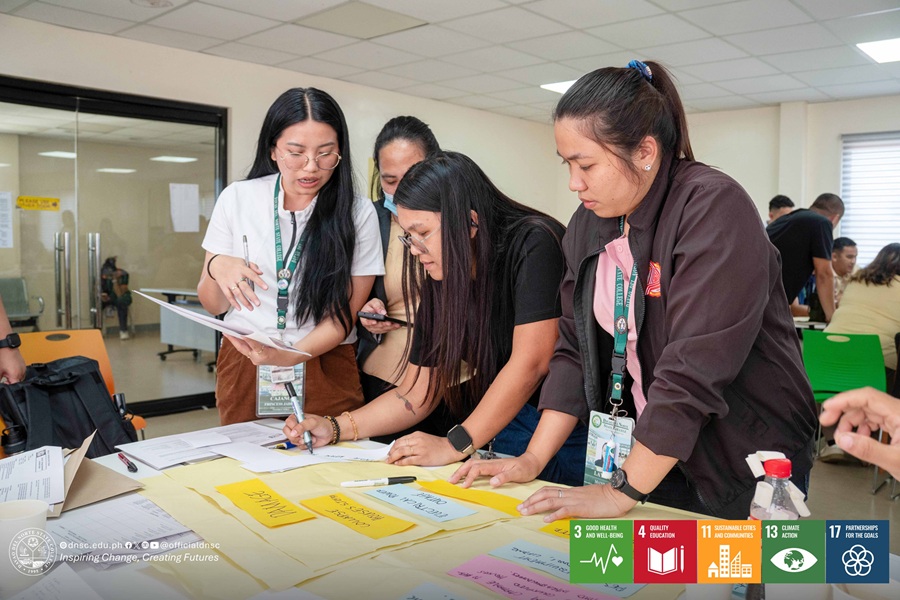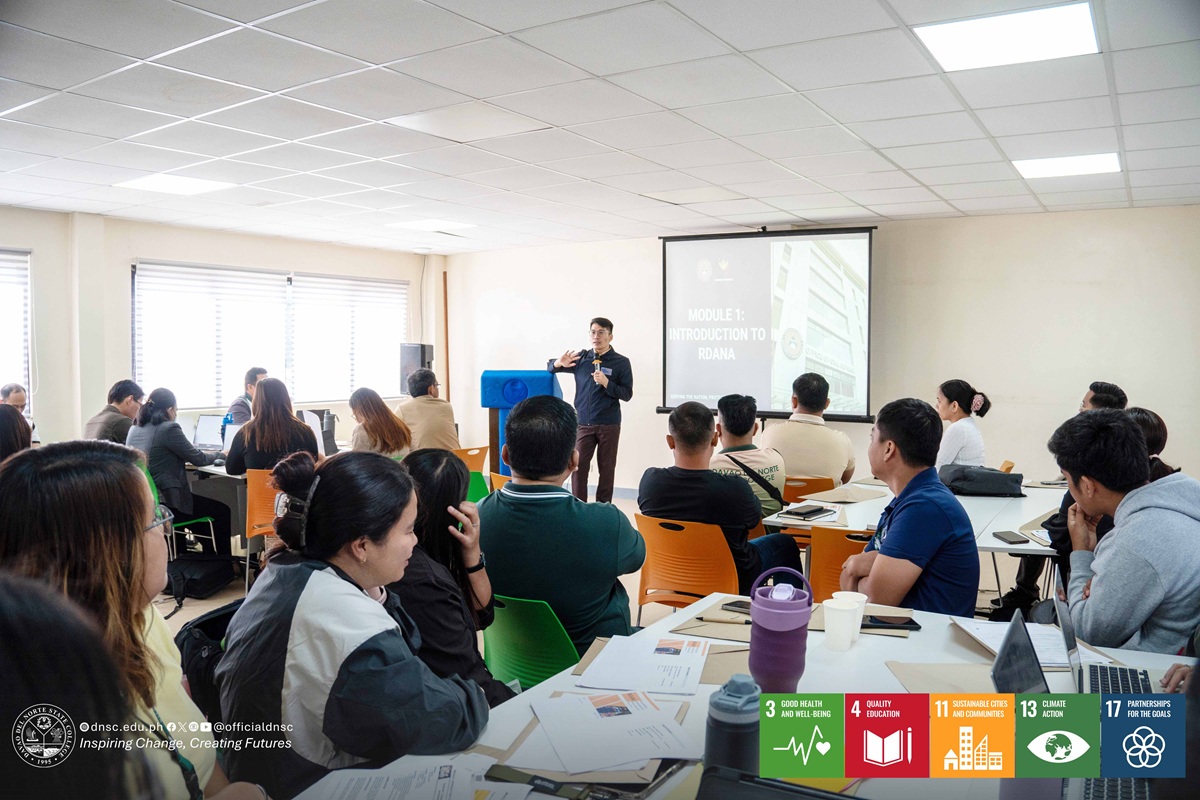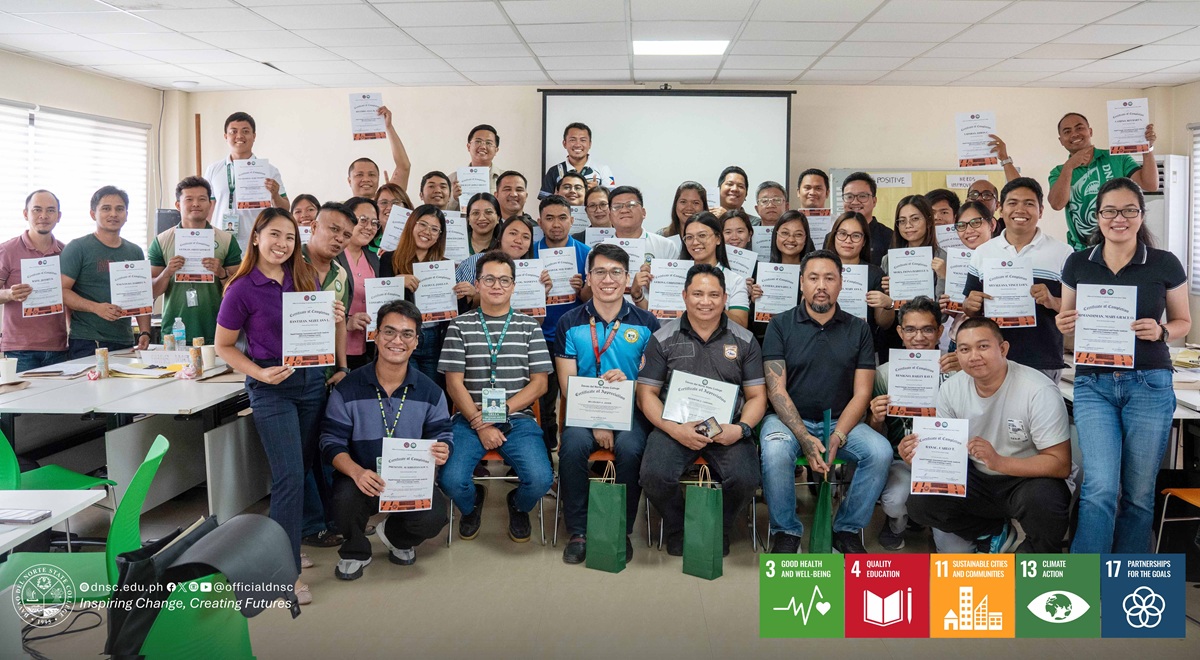
PANABO CITY – Davao del Norte State College (DNSC), through its Human Resource Management Division (HRMD) and Disaster Resilience and Administration Committee (DRAC), participated in a Rapid Damage Assessment and Needs Analysis (RDANA) Training Course from March 16 to 19, 2026, held at the PDRRMC Operation and Training Center, Provincial Capitol Compound, Brgy. Mankilam, Tagum City.
The training involved selected DRAC members, the DNSC RDANA Team, and faculty from the Bachelor of Science in Disaster Resilience and Management (BSDRM) program. Participants engaged in lectures, simulations, and hands-on exercises designed to enhance their ability to assess damages and identify immediate needs during disasters.
In her opening remarks, DRAC Chair Boyeth Pelone highlighted the importance of preparedness, “Disasters can strike at any time. In these moments, the ability to quickly assess damages and identify immediate needs is critical.”
Lectures were delivered by experts from the Office of Civil Defense, including Prosper Dajalos Jr. (CDRRMO City of Panabo), Melvin Roy Javier (LDRRMO IV, PDRRMO Davao del Norte), Reden Cardinal (CHO Head, Tagum City), and Eric Rosillo (LDRRMO, PDRRMO Davao del Norte).
“Your completion of this training reflects not only your technical competence but also your commitment to serve, especially in times of disasters. The role of RDANA teams is crucial in bridging the gap between assessment and response. Through timely and accurate reporting, we enable appropriate interventions for affected communities,” said Melvin Roy Javier, course monitoring lead, as he encouraged participants to apply their learnings in real-world situations,
The program concluded with remarks from Director for Administrative Services Rhaymart Joe Gella, who emphasized the broader impact of the training, “More than an administrative requirement, this training serves a deeper purpose. As faculty members of the BSDRM program, the knowledge, skills, and insights you have gained here do not end within these four days. They are meant to be brought into your classrooms to shape future professionals who will carry forward the mission of disaster preparedness and resilience.”