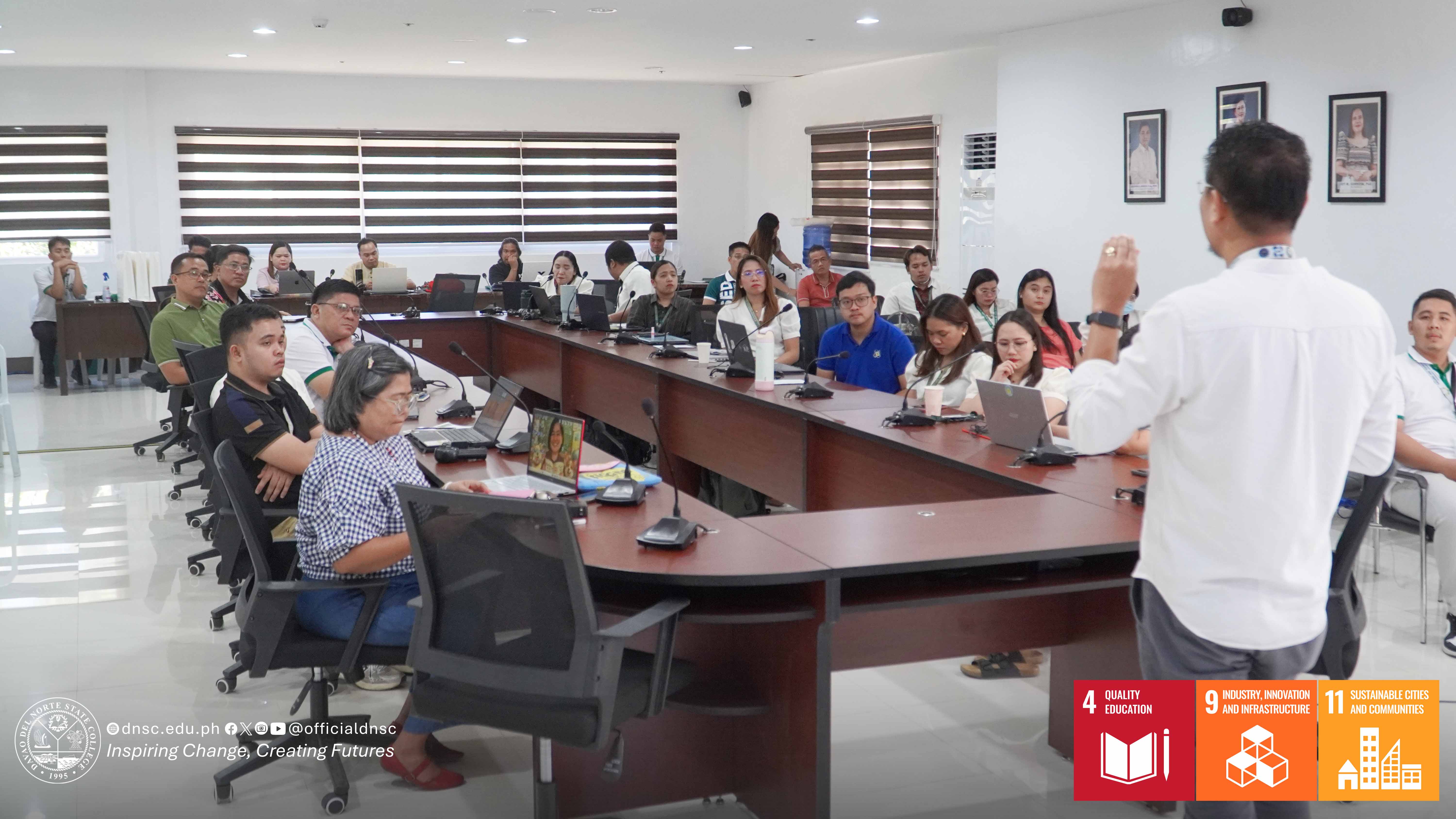
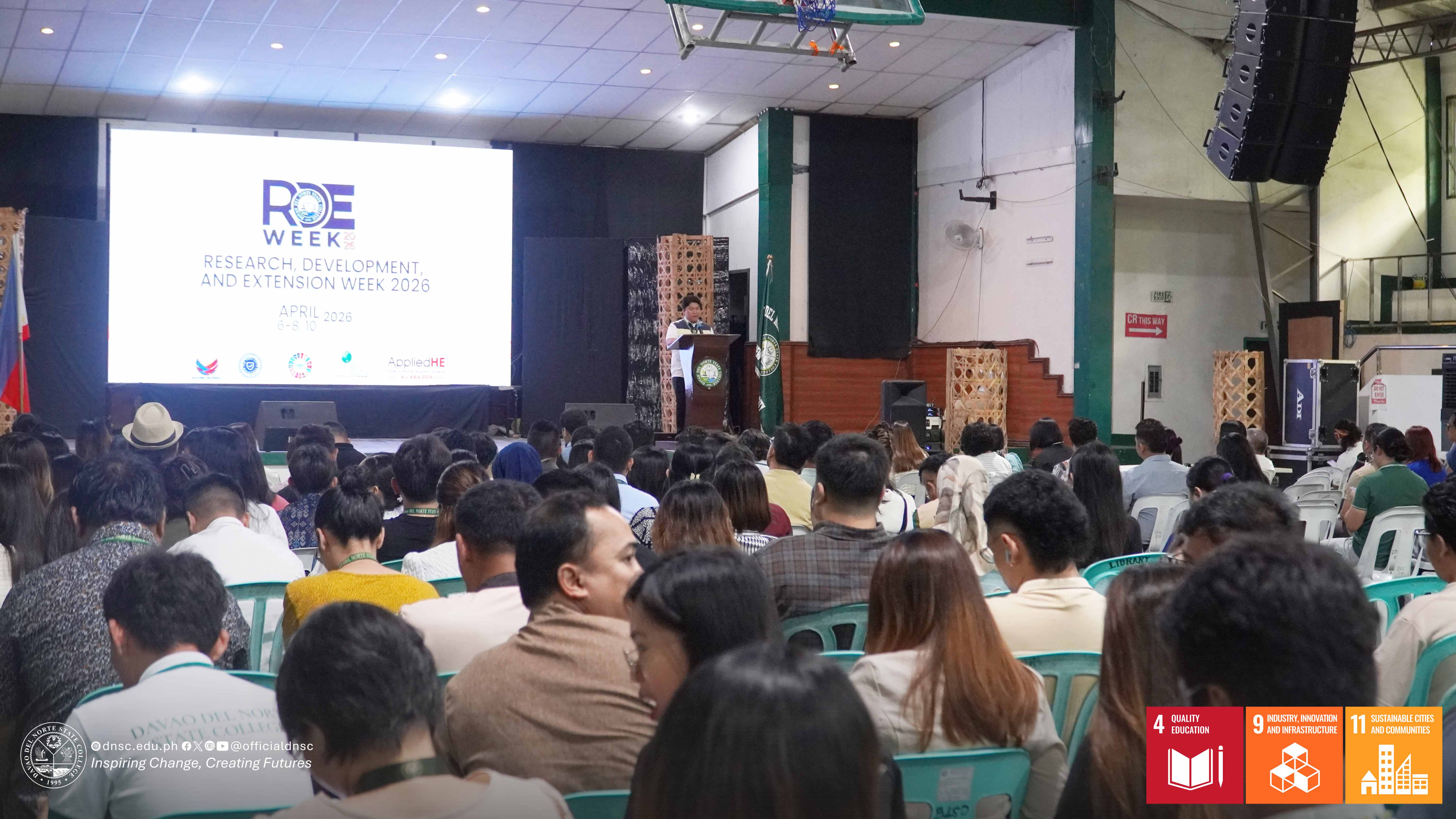
PANABO CITY – Faculty members of Davao del Norte State College (DNSC) participated in the three-day Research, Development, and Extension (RDE) Week 2026, held on April 6–8.
Director for Research, Dr. Leo D. Rayon, Jr., reminded the participants of the role of research in institutional development during his opening remarks, “Research is the cornerstone of innovation and transformation. It enables us to understand challenges, identify opportunities, and generate solutions. More importantly, research inspires change in policies, practices, communities, and lives.”
The first day at the College Gymnasium included sessions on paneling and advising techniques, and indigenous research, focusing on principles, reflexivity, and positionality.
On the second day, held at the Gender and Development Conference Hall, lectures covered bibliometrics, writing letters to the editor, short communications and essays, and publishing research papers, including selecting appropriate journals.
The final day returned to the Gymnasium for a seminar-workshop on project management and the design of research-based extension programs, emphasizing alignment of research outputs with community needs.
Vice President for Research, Development, and Extension, Dr. Eliseo F. Huesca, Jr., acknowledged challenges while urging continued innovation. “Realities challenge us to reflect and improve. While there are structural limitations such as funding and resource constraints, we must continue to create a supportive and innovative environment for our faculty and researchers. In the end, our faculty should remain at the forefront of knowledge generation. This is our role and responsibility as an academic institution,” he said.
Director for Extension Mariannie A. Rebortera, DIT highlighted the need for responsive programs, “As we continue to strengthen our extension programs, changes in how we design and implement our activities are necessary to keep pace with evolving needs and expectations. These changes aim to ensure that our initiatives remain relevant, high-quality, and sustainable.”