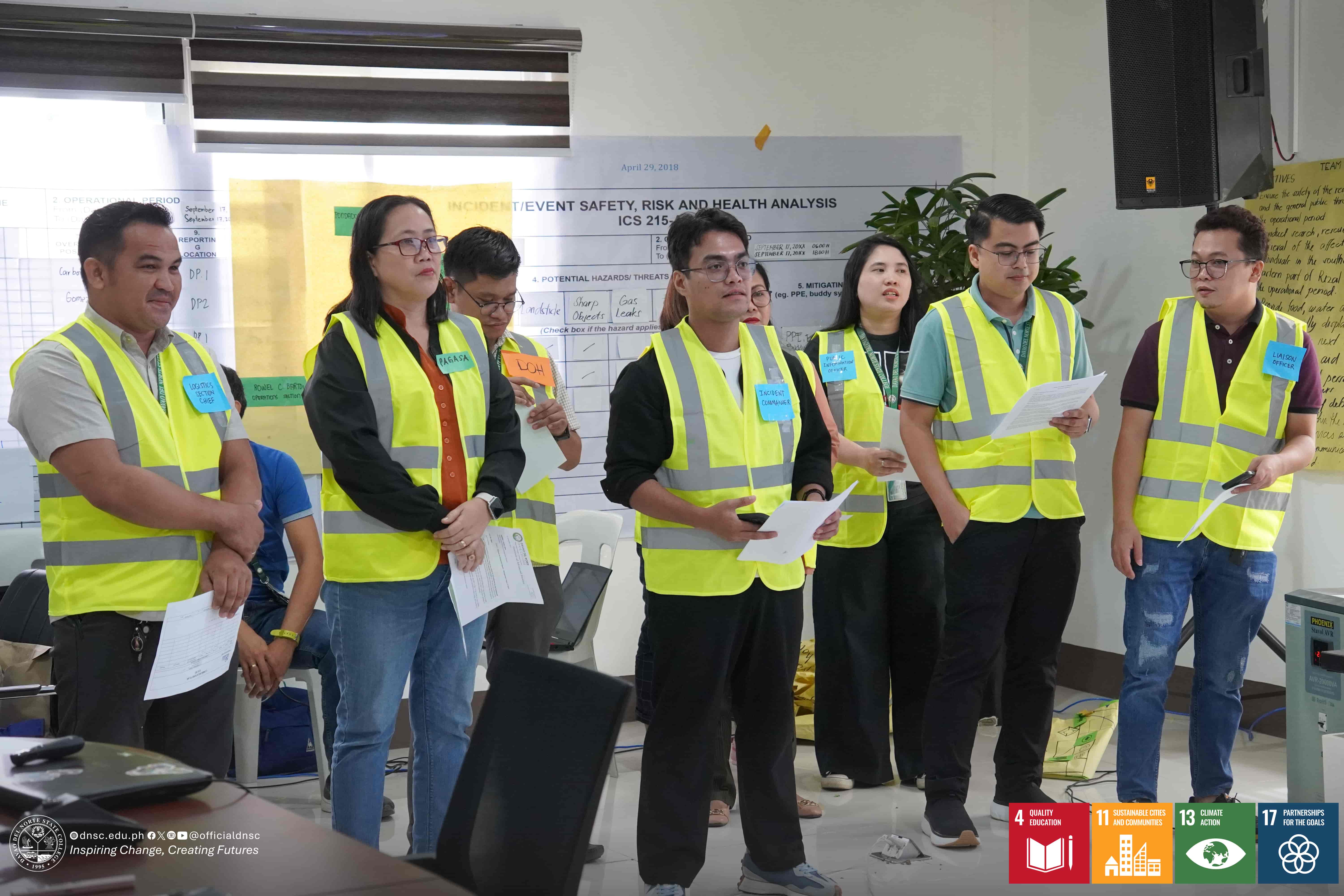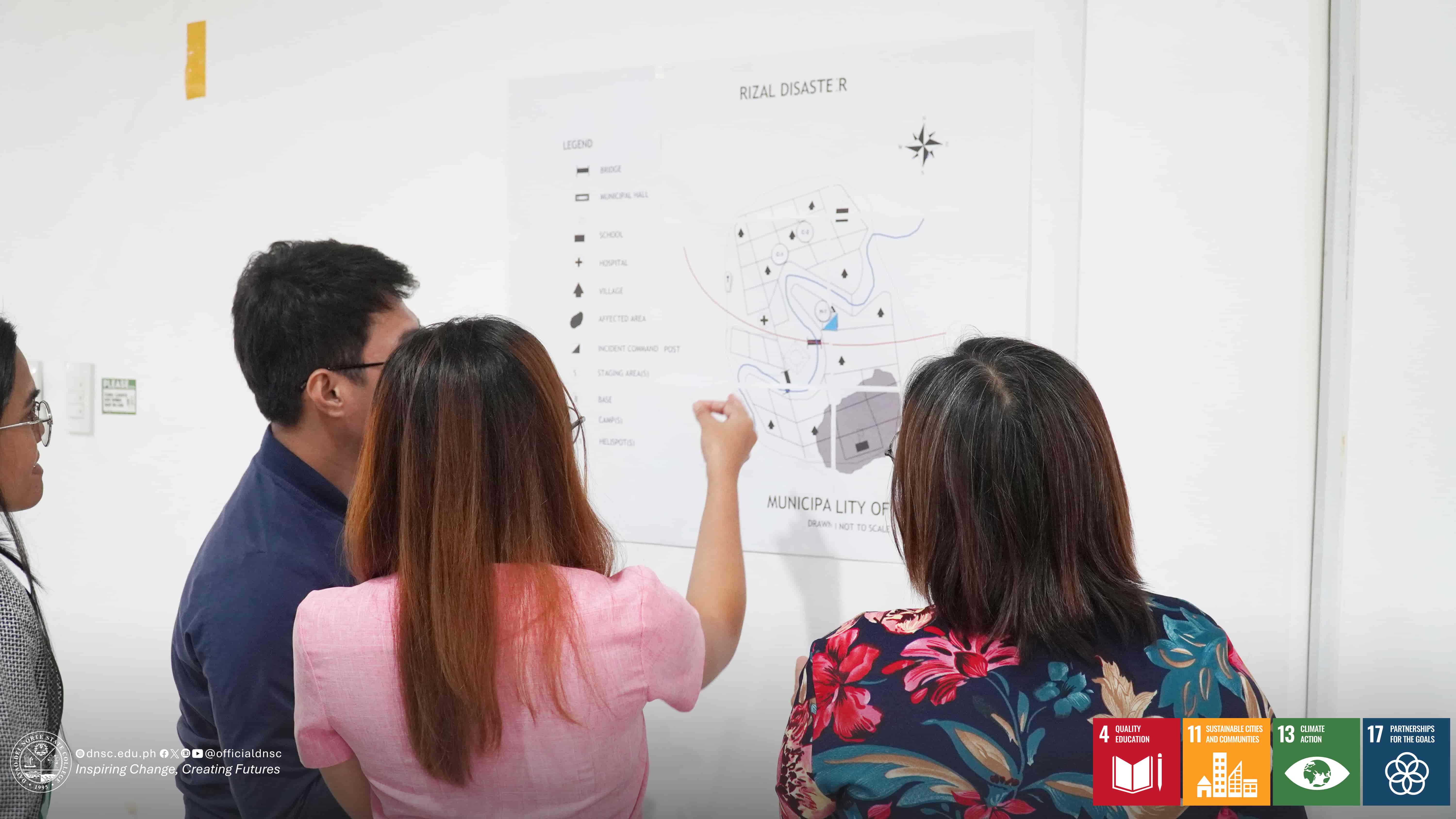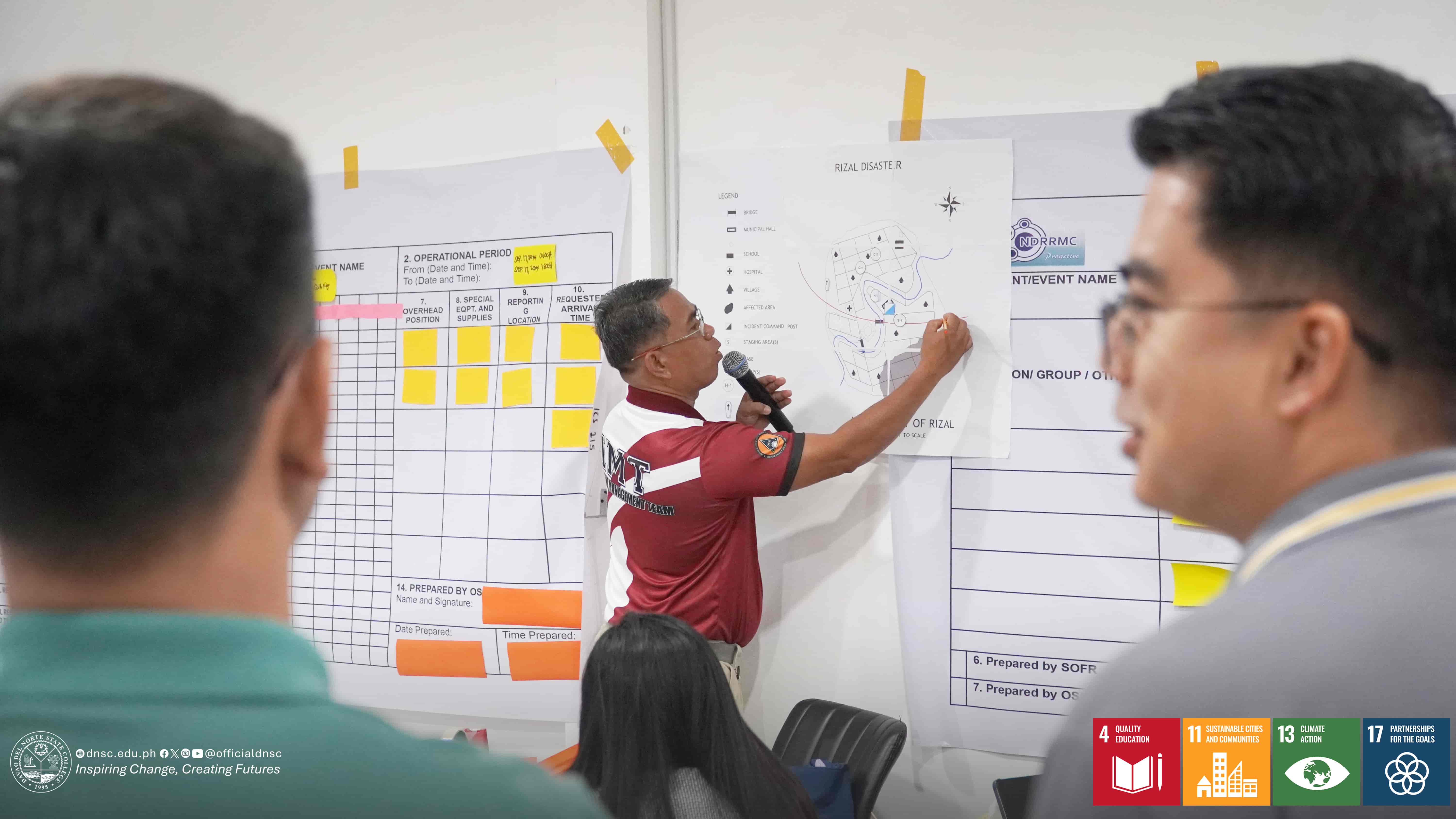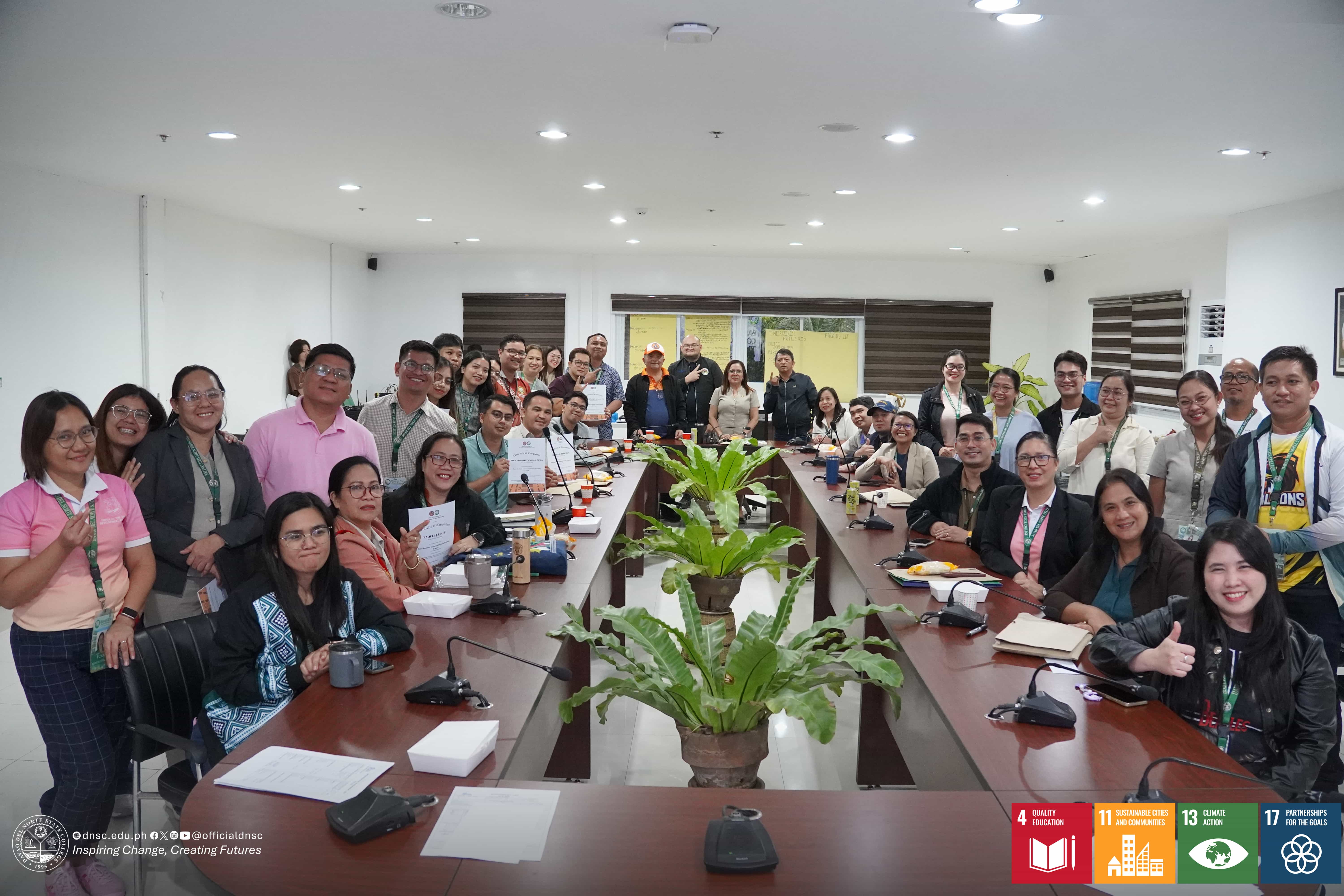
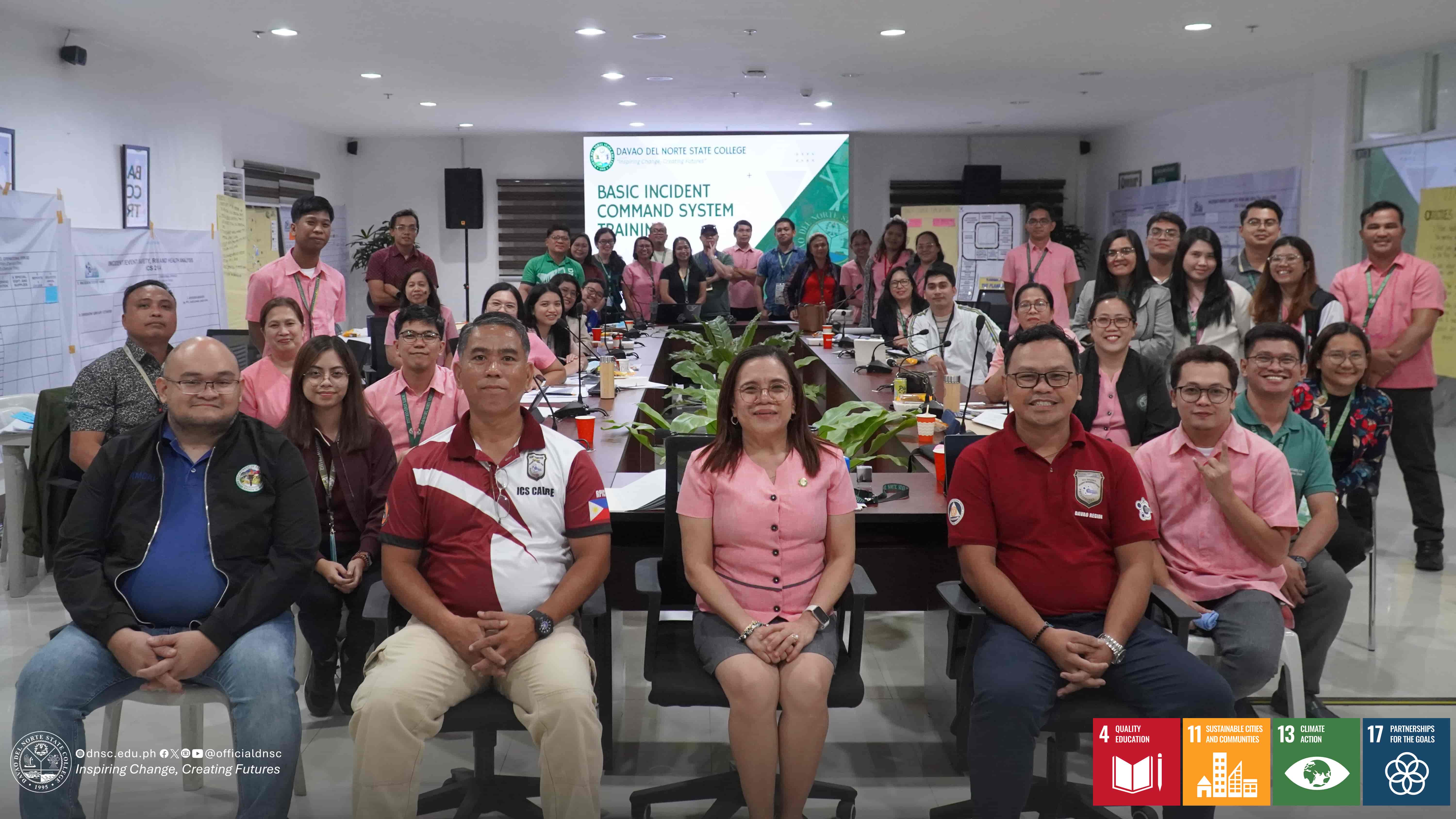
PANABO CITY – The Office of Civil Defense XI served as the expert resource for the three-day Basic Incident Command System (ICS) Training conducted for Davao del Norte State College on November 12–14, 2025, at the DNSC Gender and Development Conference Room.
The ICS, one of the flagship programs of the Office of Civil Defense (OCD), was institutionalized following the enactment of Republic Act 10121 or the Philippine Disaster Risk Reduction and Management Act of 2010, which established proactive national mechanisms for managing disasters and reducing risks.
In her message, College President Joy M. Sorrosa expressed appreciation for the training, “During emergencies, I can’t just delegate if I don’t know what and how to delegate. After attending and hearing that there are still more than 22 courses aligned to this kind of training, even though disaster resilience is our niche, this is still a process. We are still in the process of learning and implementing, not just for professional growth, but for the preparedness of the institution, and for the safety of our communities.”
The training introduced participants, composed of members of the College Management Team and selected office and unit heads, to the ICS framework through a series of modules covering ICS introduction, organization and staffing, facilities, managing incidents and planned events, conducting incident assessment and management by objectives, resource organization, event planning, and procedures for transfer of command, demobilization, and closeout.
Dr. Mark Lester L. Navales, gave his training impression as one of the participants, “First is that the line-up of speakers is really competent. They have real-life testimonials, and they clearly speak from a point-of-view of those who have done this for a long time and who have vast experience on the ground. Second, I learned a lot, and third is that one of those learnings is that disaster resilience needs a budget before it becomes cost-efficient.”
During the closing program, OCD XI Regional Director Ednar G. Dayanghirang congratulated the participants and expressed optimism about future collaborations between the College and OCD.
“I am looking forward for this College’s and OCD’s partnership in both advocacy and research. You can greatly help us, especially with futures thinking and strategic foresight,” he suggested.